
Parsel + Getcho: Cheapest Transport Miles, Pound-for-Pound
Parsel dispatches hundreds of daily deliveries to and from 3PLs across the country. Since moving to Getcho, the Parsel team gets automatic suggestions on fleet, vehicle size and stops, with expected on-time-pickup rates, so it pays the lowest possible dollar for transportation without sparking endless ops issues.
- $1k/month
- saved on a single Miami route
- Same 30-minute pickup window
Cheapest transport miles, pound-for-pound
Logistics is diverse: you have last-mile deliveries riding in sedans or even Grubhub bikes, you have middle mile hauls that are 53 feet long and 30 pallets full, and everything in between.
It can be hard to know which fleet is the best fit for a specific delivery. How much should we insure a payload? What’s the range? If it’s freight, do we need a lift gate or a pallet jack or multi-stop availability or temperature control? The available options and configuration are enough to cause a headache, and that’s not even factoring in pricing.
First-mile, middle-mile, every damn mile with Parsel
Parsel is very familiar with this space: they dispatch hundreds of daily deliveries to and from 3PLs across the country, running the full gamut of possible shipment sizes and accessorials. Even with a dedicated ops team keeping tabs on all orders, how can they know with certainty if a given route is maximizing efficiency?
It's easy to overpay for a 10' box truck when the load could fit comfortably in a sprinter van. It's worse to underbook a load or need to break down and handload a pallet.
Sure, Frayt might not be the most cost-effective option for a sprinter van, but when you need to hit a time-sensitive pickup every day in Salt Lake City, would Senpex or Bungii be reliable enough?
These sorts of questions require a lot of delivery experience to answer. Most shippers don’t have the time or latitude to experiment with new fleets, so they settle for the devil they know rather than gambling on an alternative. Since moving to Getcho, Parsel has the insight to make these critical decisions with minimal risk. Leveraging years of nationwide delivery experience, Getcho gives the Parsel team automatic suggestions on how to improve their shipping efficiency, alongside stats like expected on-time-pickup percentage and confidence. Suddenly, cutting costs on high-pressure runs doesn’t feel so fraught.
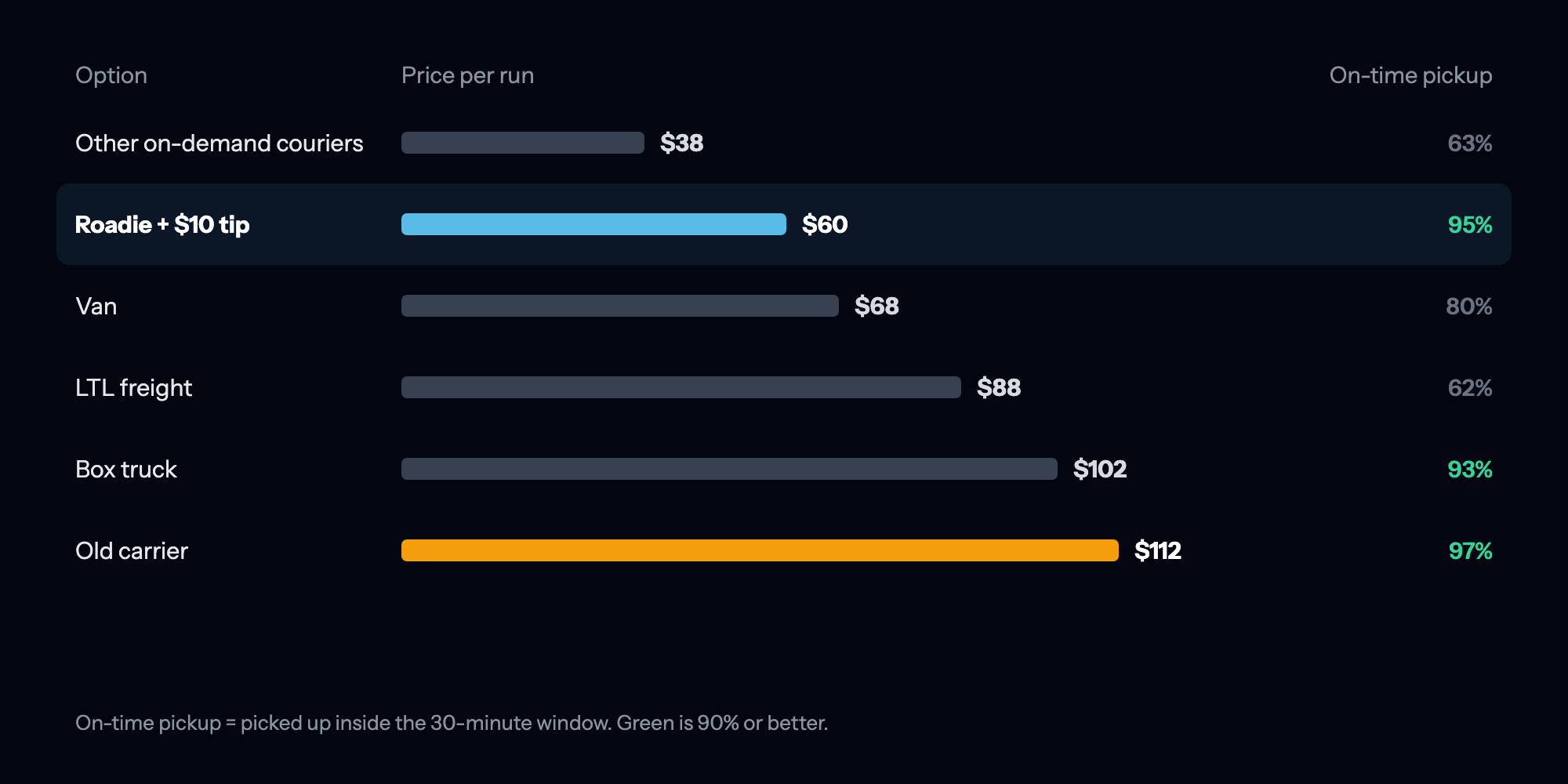
When size is a factor
Take one recent example: a daily run in Miami cost $112. The load size fluctuates, but it always fits in an SUV, so there are cheaper carriers available. Roadie quotes this route at about $50. Any 1st grader could tell you which is the cheaper pick, but the shipper has a strict 30-minute pickup window, and missed pickups are damaging to Parsel’s customer relations and brand. The Parsel ops team took a look at Getcho’s suggestion: run the Roadie with a $10 tip to attract a driver quickly. Since then, they haven’t looked back. On just this route, Parsel is saving 36%, which translates to $1k/month. There are literally 100s of these routes to optimize.
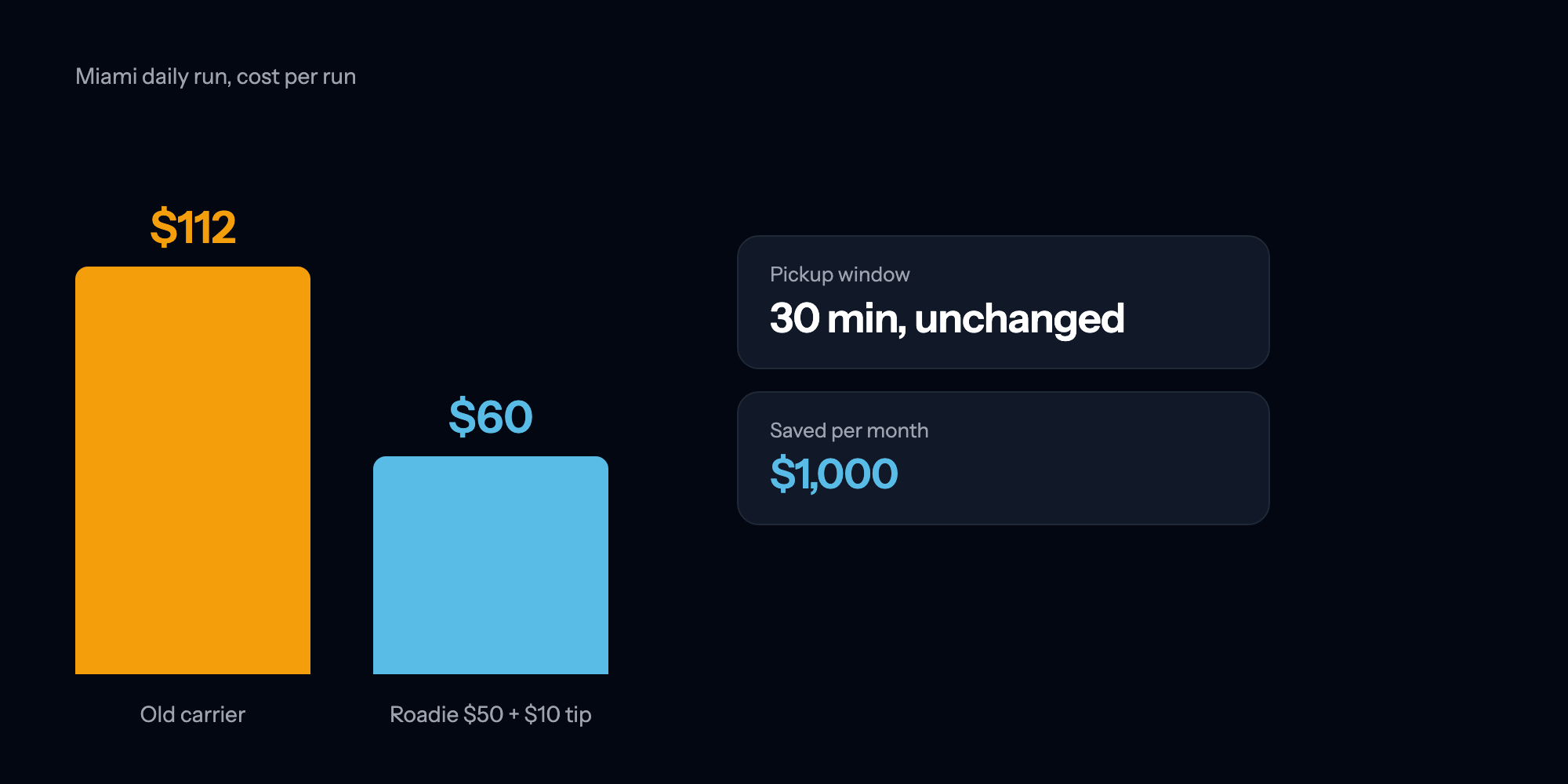
Using BOLs and delivery photos to measure utilization
Imagine a 13-pallet run from Secaucus to Philadelphia. It’s a pretty good bet that a maxed out 26’ truck is the most cost-effective option. No need to consider anything smaller right?
Well, most of the time we’re dealing with projections. Just because we booked 13 pallets doesn’t mean we’re actually shipping 13 pallets. And so, the next thing we look at is utilization. Theoretical sizes are often driven by imperfect math on labels printed. Not all labels make it out to the dock every day. We need to adjust for some of yesterday’s labels.
We can turn to something precise: BOLs and delivery photos. Getcho uses computer vision to find gaps in the expected load vs the actual shipment.
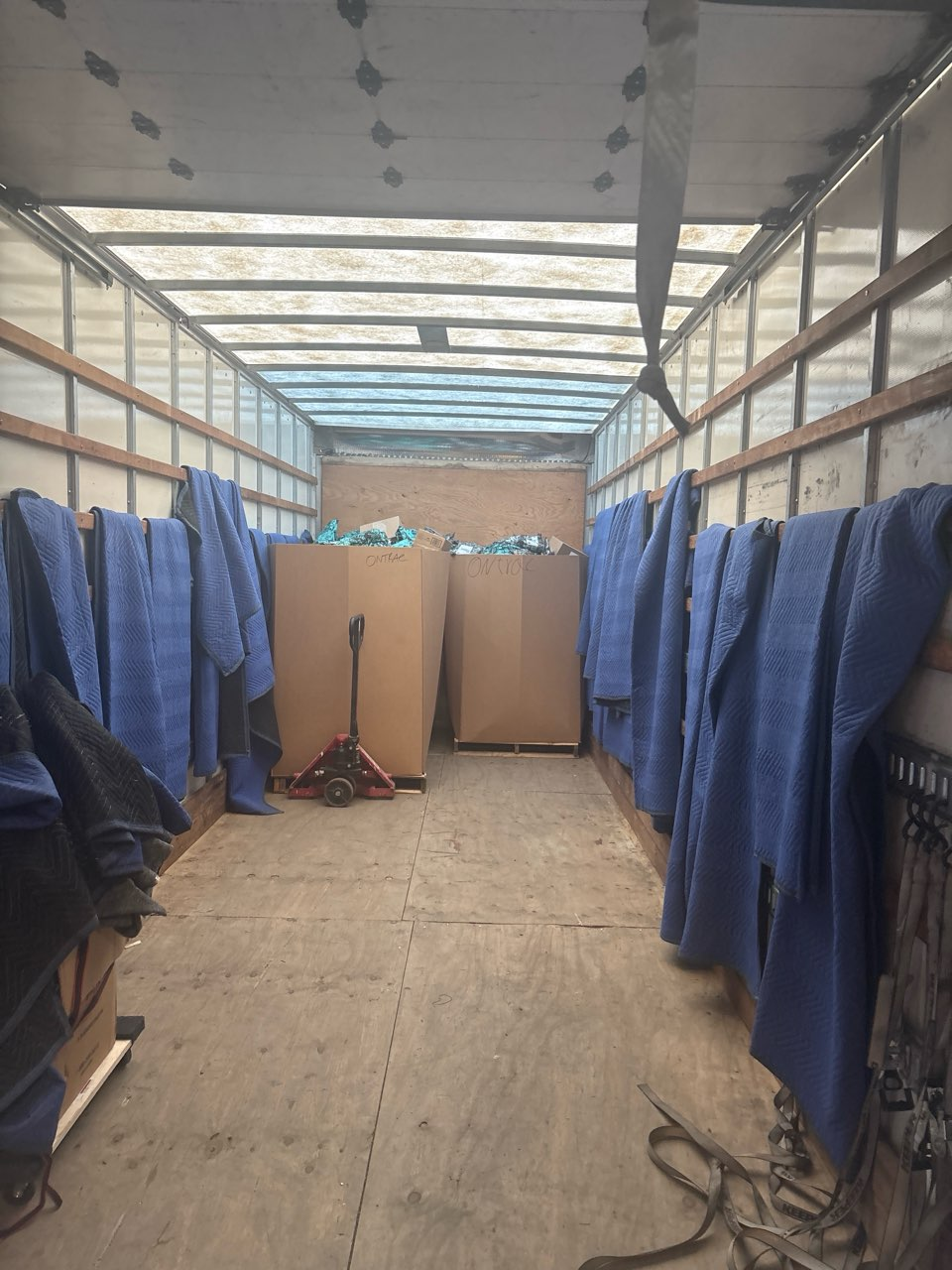
It turns out that on Tuesdays and Thursdays that 13-pallet run is actually just 6 pallets. And there is a 53’ truck with space for 10 more pallets. Let’s save the 26’ run on these days and save a few hundred dollars a week.
Quantifying reliability - how much does that cost?
Both Getcho and Parsel have a “no package left behind” policy. We track down every parcel, and as a result we have a very hands-on mentality.
Therefore we know that there’s such a thing as over-optimizing price: booking a less reliable carrier for cheaper, at the expense of missed shipments is an obvious example. Another is default insurance value. The probability of a bogus detention fee or a hidden surcharge is a third.
One of my favorite examples of how we quantify reliability is our approach to multistop transport. It’s usually a lot cheaper to add a stop than to send another vehicle. With Parsel, we’ve made some obvious modifications to save dollars with an extra stop.
And then there are other times where we might recommend paying 5%-10% more net on two single stop runs. The math is:
- What’s the probability of a delay or no-show?
- Historically about 5% on delays or 2% on no-shows.
- What’s the probability of two separate delays or no-shows? Almost negligible
- How much does an extra stop slow down the whole run?
- How does 30 minutes impact a run’s ability to make it out for the last-mile today?
We use AI to review these factors every week and help Parsel weigh theoretical costs against real savings.
Parsel knows that they are paying the lowest possible dollar for transportation without sparking endless ops issues. Meanwhile, their customers get the best delivery prices on the market while being able to count on a timely delivery.
Keep reading