Logistics Agent Zero: Watchdog
Watchdog is Getcho’s real-time delivery monitoring agent — it watches every active delivery, every minute, and alerts your team only when something needs attention. No one should be staring at a tracking link. And certainly, no one should be shuffling between 15 tracking links.
Watchdog is Getcho’s first publicly consumable logistics agent. It’s like PagerDuty meets logistics.
Sources:
- Getcho’s fleet network
- Any public tracking link
- Getcho Relay
Actions:


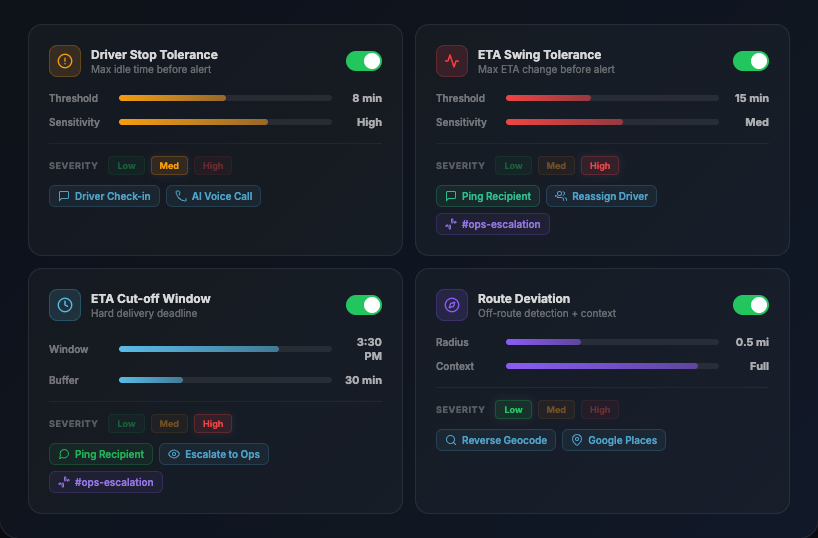
Watchdog lets logistics managers set parameters for scheduled and ongoing deliveries. Like, for example:
- Driver stop tolerance – the amount of time a driver can stop before Watchdog investigates
- ETA swing tolerance – how much a delivery ETA can change before Watchdog investigates
- Or, just plain ETA cut-off times. Receiving hours are 9:30am – 3:30pm; we have no tolerance for anything later.
- Route deviation – does the driver have other stops? Fleet APIs don’t always expose this information. This is useful for painting a picture.
That last one’s interesting. Some dispatchers see a driver off the beaten path and reflexively assume something’s wrong. But Watchdog will look a bit closer. It uses geographic context to spot when a driver is at a gas station or making a legitimate detour, so your team only hears about the diversions that actually matter.
Why don’t we check back later? Easy. Watchdog runs continuously. No one should be staring at a tracking link.
How it works
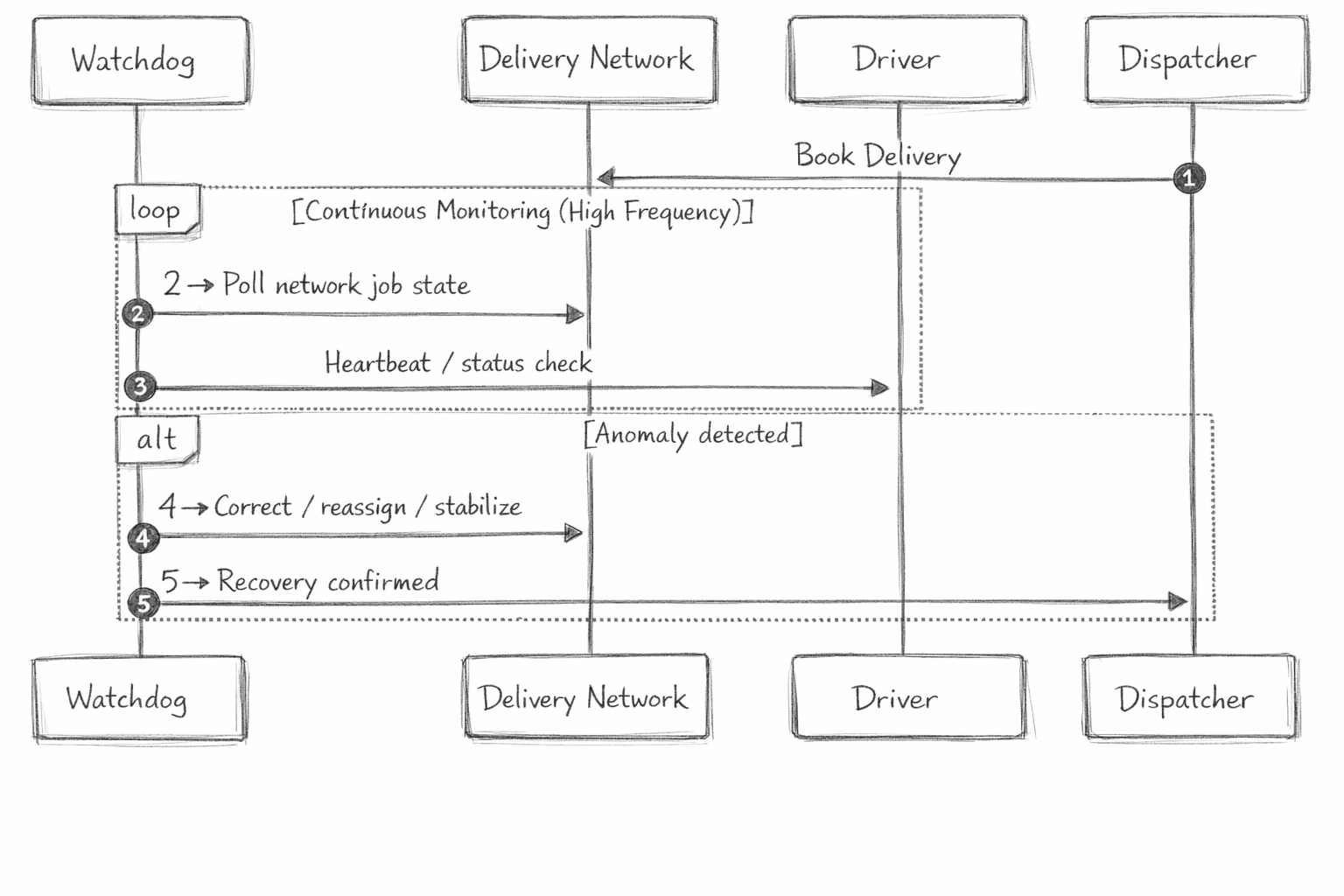
Watchdog draws on millions of Getcho delivery data points and continuously evaluates every active delivery against the parameters your team configured. It catches stops, diversions, and ETA swings as they happen — not after a customer complains.
When Watchdog sounds the alarm
Incident detection by itself is a dog with no bite. And Watchdog has bite.
It interfaces directly with Getcho Recovery Workflows. These have the following abilities:
- Reaching out to drivers and fleet support directly
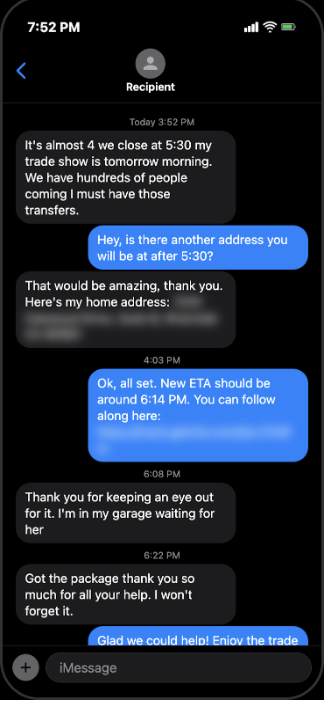
- Pinging stakeholders – ops, the shipper, the recipient – to see if the updated timing still works
- Triggering an auto driver-deassign when a carrier supports it
When drivers and stakeholders are given the chance to make requisite updates in real time, customer sentiment is overwhelmingly positive. During the recent nor’easter where entire cities shut down transportation, Getcho supported dozens of seamless reschedules.
If you or your dispatchers regularly tab between dozens of tracking links then Watchdog can help.
Stop Staring at Tracking Links
Let Watchdog monitor every delivery, every minute — so your team only gets involved when it matters.
Book Your Free Demo →Frequently Asked Questions
What is Watchdog? Watchdog is Getcho’s real-time delivery monitoring agent. It connects to Getcho’s fleet network and any public tracking link, checks every active delivery, and alerts your team via email, SMS, WhatsApp, phone, or Slack when something needs attention.
What kinds of issues does Watchdog detect? Watchdog evaluates multiple incident types including driver stops exceeding tolerance, ETA swings beyond threshold, missed delivery windows, and route deviations. It adds geographic context so it won’t flag a driver who’s just at a gas station.
Do I need to use Getcho’s delivery network to use Watchdog? No. Watchdog works with any public tracking link in addition to Getcho’s fleet network. If you can track it, Watchdog can monitor it.
What happens when Watchdog detects a problem? Watchdog interfaces with Getcho Recovery Workflows — it can reach out to drivers and stakeholders directly, ping the ops team to confirm updated timing, or trigger an auto driver-deassign when a carrier supports it.
How is Watchdog different from delivery tracking software? Tracking software shows you where a driver is. Watchdog actively monitors every delivery against your parameters and takes action when something goes wrong — it’s the difference between a dashboard and an on-call ops team.